Nutrition plays a central role in healthy aging. As we get older, the food we eat and the way we share meals can have a lasting impact on our physical health, mental sharpness, and emotional well-being. For seniors, thoughtful attention to nutrition, hydration, and the social experience of dining can make a meaningful difference in daily life.
Why Nutrition Matters More with Age
Our bodies go through many changes as we age. Metabolism slows, muscle mass tends to decrease, and the body may process certain nutrients differently. Because of this, older adults often need fewer calories but higher amounts of key nutrients to stay healthy and active.
Nutrients such as protein, calcium, vitamin D, vitamin B12, and fiber become especially important. Protein supports muscle strength and helps maintain mobility, while calcium and vitamin D protect bone health. Fiber aids digestion and supports heart health, and B12 plays a role in energy levels and brain function.
Eating a wide variety of foods—lean meats or fish, colorful fruits and vegetables, whole grains, dairy or fortified alternatives, and healthy fats—helps ensure that the body gets the right mix of vitamins and minerals. Even small changes, like choosing whole-grain bread over white bread or adding a serving of vegetables to each meal, can make a positive difference over time.
Hydration: The Often-Overlooked Essential
Hydration plays an equally important role in senior health, yet it’s easy to forget. As people age, the sense of thirst naturally decreases, meaning many seniors may not realize they’re dehydrated until symptoms appear.
Dehydration can cause fatigue, confusion, headaches, or dizziness, and in severe cases, it can lead to more serious health issues. Encouraging steady fluid intake throughout the day is key. Water is best, but fluids can also come from sources like milk, herbal tea, soups, and fruits such as oranges, melons, and grapes.
Adding natural flavor to water—like a splash of lemon or a few slices of cucumber—can make it more enjoyable. For some, setting reminders or keeping a favorite cup within reach throughout the day helps ensure steady hydration.
The Importance of the Dining Experience
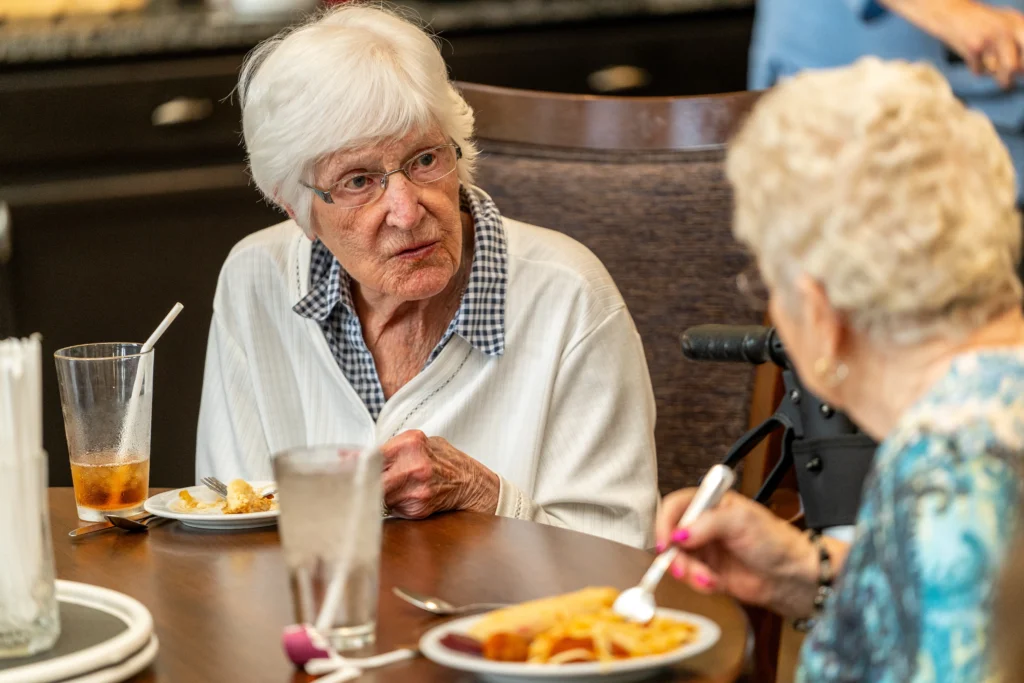
Nutrition is about more than nutrients—it’s also about enjoyment and community. For many older adults, the social aspect of eating is just as important as the food itself. Sharing a meal with others helps boost mood, stimulates appetite, and creates a sense of belonging.
Community dining offers opportunities for conversation, laughter, and connection. Studies have shown that seniors who eat with others are more likely to maintain a balanced diet and experience improved mental and emotional health. Eating together can turn an ordinary meal into a highlight of the day.
Even small traditions, like gathering for coffee in the morning or celebrating birthdays with a shared meal, can strengthen friendships and create meaningful routines.
Supporting Healthy Aging Through Mealtime Habits
Good nutrition and hydration work hand-in-hand with physical activity, social engagement, and medical care to promote healthy aging. Encouraging mindful eating, paying attention to hunger and fullness cues, savoring flavors, and eating without distractions—can improve digestion and satisfaction.
It’s also important to recognize that some seniors may face challenges with appetite, chewing, or digestion. Adjusting meal textures, offering smaller portions more often, or focusing on nutrient-dense snacks can help ensure their bodies still receive the fuel they need.
Approach to Wellness
In a senior living environment, nutrition, hydration, and community dining come together to support every aspect of wellness. Well-balanced meals provide nutrients for strength and energy, hydration keeps the body functioning properly, and shared meals foster connection and joy.
When these elements are combined, they form a strong foundation for maintaining independence, promoting vitality, and enhancing quality of life throughout the aging process.
Assisted Living One Bedroom
(click on the image below to view larger, download or print)
Assisted Living One Bedroom Standard
(click on the image below to view larger, download or print)
Assisted Living One Bedroom Standard
(click on the image below to view larger, download or print)
Assisted Living One Bedroom
(click on the image below to view larger, download or print)
Assisted Living One Bedroom Standard
(click on the image below to view larger, download or print)
Assisted Living One Bedroom Standard
(click on the image below to view larger, download or print)
Click on the location below for more information or to contact an advisor today.